
Invisalign vs Braces in Chattanooga, TN
Two ways to move teeth, two very different experiences day to day. Here’s how we think through the choice with patients at Wilcox Family Dental.
How We Compare Invisalign vs Braces in Chattanooga TN
When patients ask about Invisalign vs Braces in Chattanooga TN, they usually want one of two things: a straight answer about which one will work for their bite, or a straight answer about which one will fit their life. Dr. Rollings will give you both. We look at your X-rays and intraoral photos together, talk through what your teeth are actually doing, and explain why one option might be a better fit than the other for your specific case.
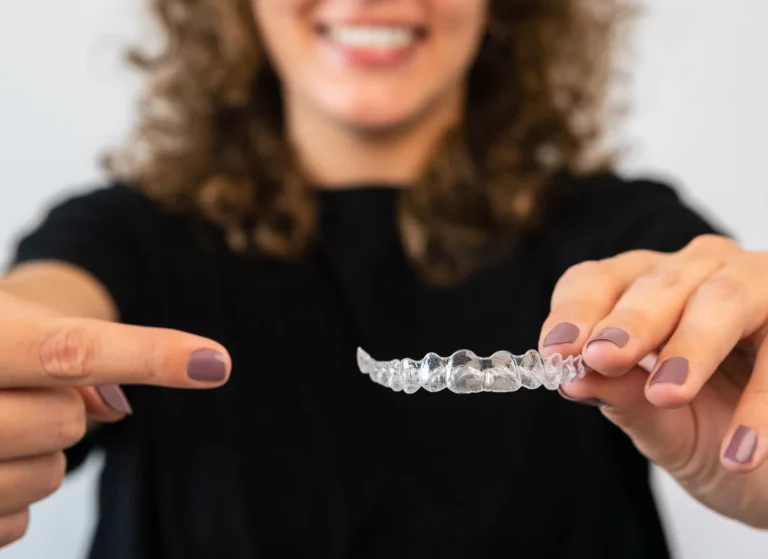
Invisalign uses a series of clear, removable trays that shift teeth in small increments. Traditional braces use brackets bonded to each tooth, connected by a wire that gets adjusted over time. Both can produce excellent results. The honest version is that they’re not interchangeable for every patient, and the right answer depends on what your teeth need to do, how disciplined you’ll be about wearing trays, and what you can reasonably budget.
We see families from across Chattanooga, East Ridge, Red Bank, Hixson, Soddy-Daisy, and Signal Mountain who want a clear comparison before they commit. This page lays out what each treatment actually involves, who tends to be a better candidate for which, and how we walk through the decision in the consultation.
How Invisalign Moves Teeth Compared to Traditional Braces
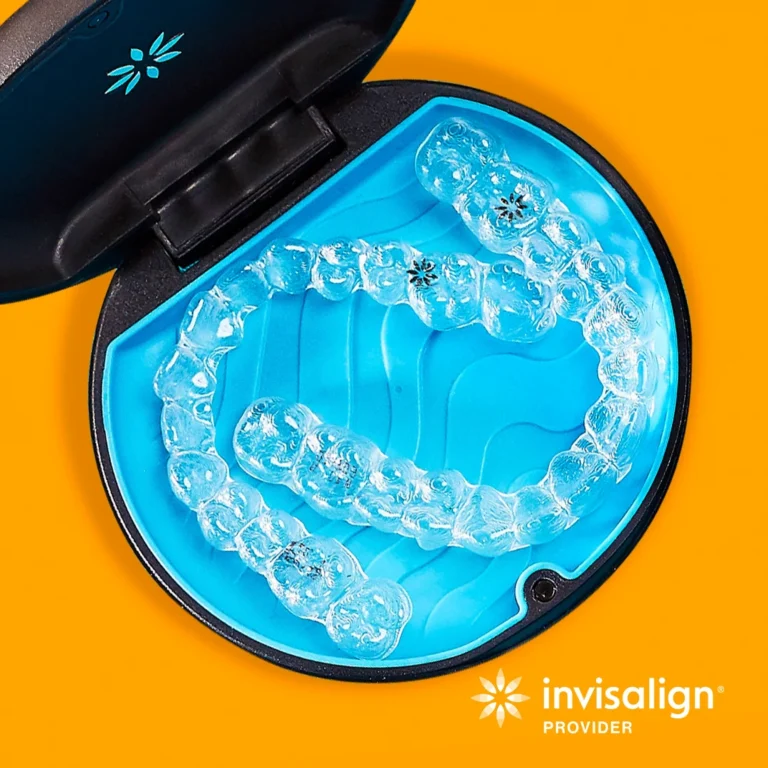
Invisalign moves teeth by applying gentle, controlled pressure through a sequence of custom trays. Each tray is worn for one to two weeks, then swapped for the next one in the series. The trays are designed from a digital scan of your mouth, so the full treatment plan is mapped out before you ever put the first one in. You can see, on a screen, where your teeth start and where they’re planned to end.
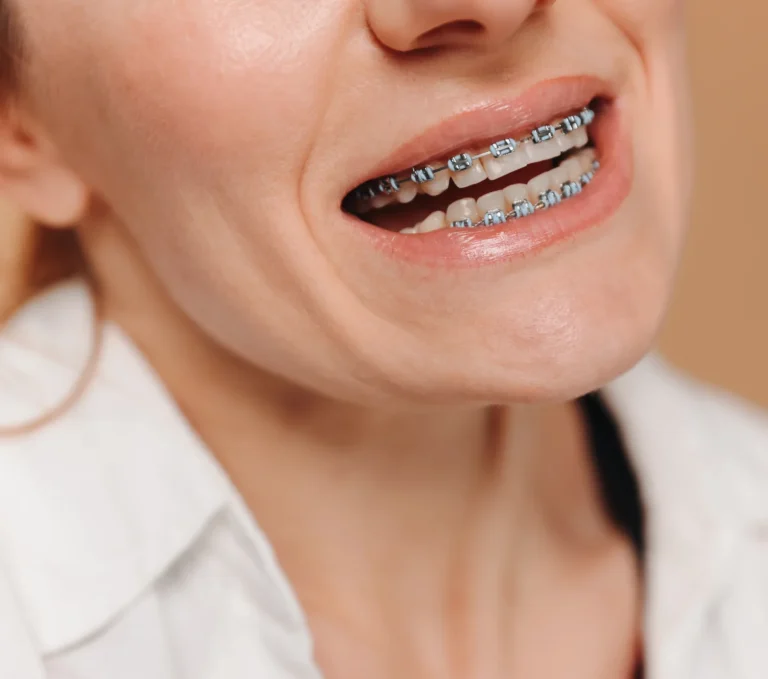
Braces work differently. Brackets are bonded directly to each tooth, and a wire runs through them to guide movement. Adjustments happen in person, usually every four to six weeks, as the orthodontic team changes wires or tightens what’s already there. Because the appliance is fixed, braces can apply force in directions that are harder to achieve with trays, which is part of why they remain a strong option for more complex movements.
For mild to moderate crowding, spacing, and many bite issues, Invisalign is often a comparable or better fit. For significant rotations, large vertical movements, or cases where teeth need to be moved through bone in ways that require constant, multi-directional force, braces sometimes still win. We’ll tell you which category your case falls into rather than steering you toward the option we’d rather sell.
Who's a Better Candidate for Clear Aligners vs Brackets and Wires
Invisalign tends to be the better choice for adults and older teens who want a less visible option and can commit to wearing the trays 20 to 22 hours a day. That last part matters more than people expect. If trays sit in a case during lunch, dinner, coffee, and the occasional snack, treatment slows down or stops progressing. The aligners only work when they’re in your mouth.
Braces tend to be the better choice for younger patients whose compliance with removable appliances is uncertain, and for cases where the tooth movements are more complicated than aligners can reliably handle. They’re also a reasonable choice for patients who simply prefer not to think about a removable device at all. Once braces are on, they’re on, and the work happens whether you remember it or not.
There are also patients who could go either way. In those cases we walk through the trade-offs honestly: appointment frequency, total treatment time, what each one costs, what each one looks like on day one and on day three hundred. Dr. Rollings will tell you which option he’d choose for his own family and why. You get to make the call.
What an Invisalign or Braces Consultation Includes Here
Your consultation starts with a conversation about what you want to fix and why. We take digital X-rays and intraoral camera images so we’re all looking at the same teeth on the same screen. If Invisalign is on the table, we’ll also discuss the digital scan process that maps out tray-by-tray movement. None of this is for show; it’s how we make sure you and Dr. Rollings are working from the same information.
From there we lay out the realistic options. That might mean Invisalign only, braces only, both as viable paths with different trade-offs, or in some cases a recommendation to address something else first, like a cavity or gum inflammation, before orthodontic work begins. We’ll explain the reasoning behind whatever we recommend rather than just handing you a treatment plan.
Before you commit to anything, you’ll get a written estimate. That includes the expected length of treatment, the number of visits, what’s covered by your insurance if applicable, and what you’d owe out of pocket. We give you the estimate before we start, not after.
Paying for Invisalign or Braces Without Surprises
Orthodontic coverage varies widely from plan to plan. Some policies cover a percentage of Invisalign and braces equally, some cover one but not the other, and some include a lifetime orthodontic maximum that’s separate from your annual benefit. We accept Medicaid and all major insurance providers, and we’ll verify your specific orthodontic benefit before you decide between the two treatments. If coverage tilts the math one way, you should know that going in.
For the portion you owe out of pocket, we offer financing through CareCredit, Cherry, and QuickPay. Many families spread payments across the length of treatment so the monthly number is predictable. If cost is part of how you make this decision, say so in the consultation. We’d rather talk about it directly than have it become the reason you put off care.
What You Get Out of Straightening Your Teeth Either Way
Straighter teeth aren’t only a cosmetic outc.webpome. Teeth that fit together properly are easier to clean, less likely to trap food in places a brush can’t reach, and less prone to the uneven wear that leads to chipping and cracked enamel down the road. Patients who finish orthodontic treatment often see their hygiene visits get simpler because the geometry of their mouth has changed.
Bite alignment also matters for jaw comfort. When teeth meet evenly, the muscles around the jaw aren’t compensating for a mismatch every time you chew. That doesn’t mean orthodontics solves every case of jaw tension, but for some patients it’s part of the answer. We’ll tell you honestly whether we think it’ll help in your case or whether we’d look at something else first.
Whether you finish in trays or brackets, the maintenance afterward is similar: a retainer, worn as prescribed, to keep teeth from drifting back. We’ll go over retainer options at the end of treatment so the result you worked for stays put.
Talk Through the Decision With Dr. Rollings
Bring your questions about Invisalign, braces, cost, and timing. We’ll look at your teeth, explain what we see, and lay out the options in plain language so you can decide what fits.