
Bone Grafting in Chattanooga, TN
Bone grafting rebuilds the foundation your teeth and future implants depend on. If Dr. Rollings has mentioned a graft, this page explains what it is, when it’s needed, and how we approach it at Wilcox Family Dental.
What Bone Grafting Actually Does
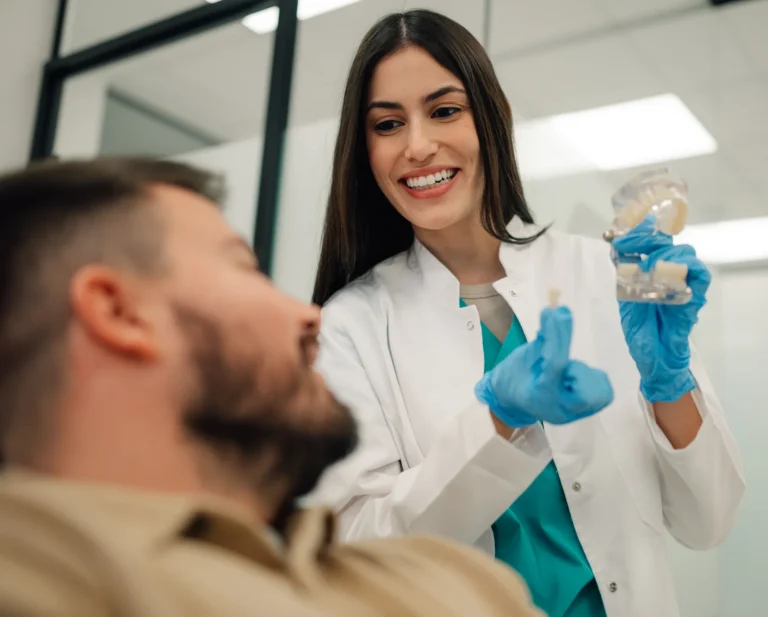
Bone Grafting in Chattanooga TN is one of those procedures patients hear about and immediately assume sounds bigger than it is. In most cases it’s a straightforward step that protects your jaw and keeps future treatment options open. We use it when the bone in your jaw has thinned, receded, or been lost after an extraction, infection, or long-term gum disease.
The simple version: when a tooth is removed or has been missing for a while, the bone underneath starts to shrink. That bone is what holds neighboring teeth steady and what an implant would eventually anchor into. A graft adds material to that area so the body can rebuild bone where it’s needed.
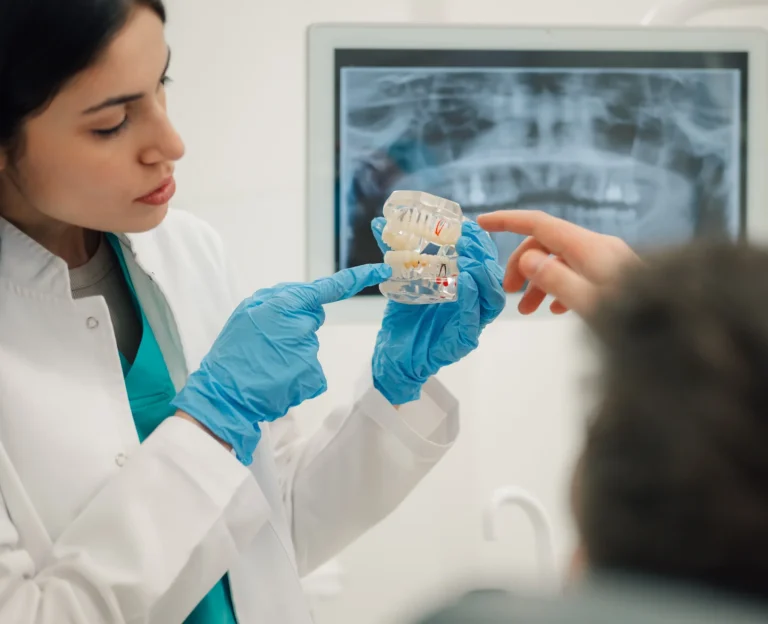
Dr. Rollings will walk you through the X-ray with you and point out exactly where the bone is thin and why. If you don’t need a graft, we’ll tell you. If you do, we’ll explain what happens if you wait, what happens if you proceed, and what it means for the rest of your treatment plan.
When a Bone Graft Is Recommended
There are a handful of situations where a graft comes up. The most common is a socket preservation graft placed at the same visit as a tooth extraction. When a tooth comes out, the socket starts collapsing within weeks. Placing a small amount of graft material into the socket holds that space and gives the bone something to rebuild around.
The second common scenario is preparing a site for a dental implant. Implants need a certain volume and density of bone to anchor into. If a tooth has been gone for years, or if infection ate away at the surrounding bone, there often isn’t enough left to support an implant on its own. A graft restores that volume before the implant is placed.
Bone loss from advanced periodontal disease is another reason. When gum disease progresses, it damages the bone that holds teeth in place. In some cases a graft, sometimes combined with other periodontal treatment, can help stabilize what’s left. Dr. Rollings will be honest about whether grafting is likely to help your specific situation or whether a different approach makes more sense.
How the Grafting Procedure Works at Wilcox Family Dental
Most grafts we place are straightforward outpatient procedures done with local anesthesia. For patients who’d rather not be fully alert, we can discuss sedation dentistry options ahead of time. The visit itself usually runs under an hour for a single-site socket graft, longer if we’re rebuilding a larger area.
The graft material itself is processed bone, either from a tissue bank or a synthetic source, depending on what your case calls for. We’ll tell you which we’re using and why before the appointment. The material is placed into the area where bone is missing, covered with a protective membrane in many cases, and the gum tissue is closed over it. Your body then does the actual work over the following months, gradually replacing the graft with your own bone.
Healing takes time, and we won’t pretend otherwise. A socket graft usually needs three to six months before it’s ready for an implant. Larger reconstructions take longer. During healing you’ll come back for follow-up visits so we can check the site, and Dr. Rollings will show you on the X-ray how the bone is filling in. None of this is for show; it’s how we make sure you and the doctor are looking at the same thing when the next decision comes up.
What's Included When You Come in for Grafting
Before we schedule anything, you’ll have a consultation with Dr. Rollings that includes digital X-rays and, when needed, a panoramic image to see the full picture of your jaw. We use intraoral cameras to walk through what we’re seeing with you on a screen, not just in our heads. If the area in question is something you can see yourself, that tends to make the conversation easier.
You’ll leave that visit with a written estimate, a clear sequence of what we’re recommending and why, and the option to do nothing yet if you want time to think. We’ll also tell you what your insurance is likely to cover before we start. If cost shapes how you make care decisions, say so. We’d rather know up front than surprise you at checkout.
On the day of the graft, we go over the plan again, place the graft, and send you home with written aftercare instructions and a direct number to call if anything feels off. Healing is usually uneventful, but we want you to know who to reach if it isn’t. Follow-up visits are built into the plan, not billed as extras you didn’t expect.
Insurance, Medicaid, and Payment for Bone Grafting
Coverage for bone grafting varies more than most procedures. Some plans cover socket preservation when it’s tied to a covered extraction. Some cover grafting only when it’s part of implant treatment, and some don’t cover it at all. Wilcox Family Dental accepts Medicaid and all major insurance providers, and we’ll verify your specific benefits and give you a written estimate before you commit to anything.
If insurance doesn’t cover the full amount, or if you’re paying out of pocket, we offer financing through CareCredit, Cherry, and QuickPay. These let you spread the cost over months rather than paying everything up front. We’re happy to explain how each one works and which tends to fit which situations. Ask about financing at your consultation and we’ll lay out the numbers honestly.
Why Bone Grafting Is Worth Considering Now Rather Than Later
The hard part about bone loss is that it’s quiet. You don’t feel it happening, and by the time it shows up in how your bite feels or how a denture fits, you’ve usually lost options. Placing a graft at the time of an extraction is far simpler than rebuilding a site that’s been empty for five years. The cost is lower, the healing is shorter, and the range of restoration options stays open.
If implants are anywhere on your horizon, even years out, a graft today protects that possibility. If you’re not sure yet, that’s a fair place to be, and we’ll talk through it. Dr. Rollings completed his DDS at Meharry Medical College and advanced residency training at the VA, and his approach is to give you the reasoning rather than the sales pitch. You decide what’s worth doing.
We serve patients across Chattanooga, East Ridge, Red Bank, Hixson, Soddy-Daisy, and Signal Mountain. If you’re already weighing a tooth extraction, an implant consultation, or treatment for gum disease, grafting is often part of that conversation. We’d rather have it with you early than late.
Talk Through Your Options with Dr. Rollings
Bring your questions and your last set of X-rays if you have them. We’ll look at everything together and give you a written estimate before you decide anything. Call Wilcox Family Dental or request an appointment online.