
Digital X-rays in Chattanooga, TN
Digital imaging is the quiet workhorse of modern dentistry. It’s how we see what a visual exam can’t, and it’s how we make sure you and Dr. Rollings are looking at the same thing when we talk about next steps.

What Digital X-rays Actually Show Us
When you come in for a checkup at Wilcox Family Dental, we use digital X-rays in Chattanooga TN to look at the parts of your teeth and jaw we can’t see with the naked eye. That includes the space between teeth where decay often starts, the bone around the roots, and the developing teeth in a child’s jaw that haven’t come in yet. Without imaging, a lot of dentistry is guesswork. With it, we can show you what we’re looking at and explain what it means.
Digital X-rays replaced film about two decades ago in most practices, and for good reason. The images appear on a screen within seconds instead of needing to be developed, the radiation dose is significantly lower, and we can zoom in on a specific tooth or area to study it more closely. They also pair well with our intraoral cameras and panoramic machine, which give us different views of the same mouth.
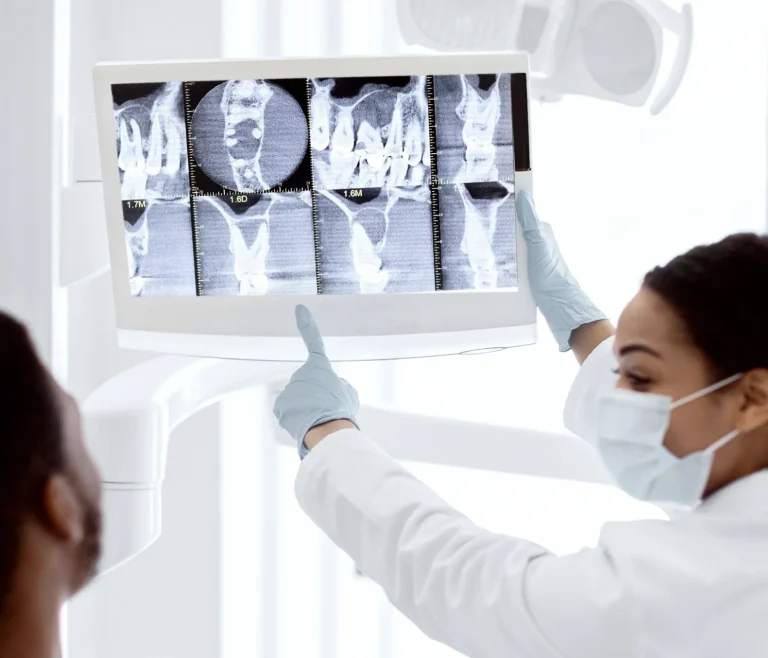
We don’t take X-rays as a routine box-checking exercise. We take them when there’s a clinical reason to, we tell you what we’re looking for, and we’ll show you the image on the monitor so you can see it too. If you’ve had recent images taken at another office, we’ll ask for them before we duplicate anything.
How Digital X-rays Differ from Traditional Film
The biggest practical difference is radiation. A digital sensor needs far less exposure to produce a usable image than film does, which means each X-ray you receive carries a lower dose than it would have a generation ago. For context, a single digital bitewing exposes you to less radiation than a short cross-country flight. That matters more for kids and for anyone who needs imaging on a recurring basis.
The second difference is what we can do with the image once we have it. On a screen, we can adjust contrast, enlarge a specific tooth, measure distances, and compare today’s image to one we took two years ago to see whether anything has changed. With film, you got what you got. If a detail was ambiguous, you had to take another shot.
The third difference is workflow. The image is in your chart before you’re out of the chair, which means Dr. Rollings can review it with you in real time rather than holding film up to a light box. None of this is for show; it’s how we make sure decisions about your care are based on what we’re actually seeing, not what we think we remember seeing.
When You Need X-rays and How Often
There isn’t one schedule that fits everyone. A patient with healthy teeth, no history of decay, and good hygiene might only need bitewing X-rays every couple of years. A patient with recent cavities, gum disease, or a lot of existing dental work usually needs them more often because we have more to monitor. Kids often get them on a different cadence because their teeth and jaws are still developing.
New patients typically get a full set of images during their first visit so we have a complete baseline. That’s not us padding the appointment. It’s how we know what’s normal for you, so that the next time something changes, we can spot it early instead of catching it after it becomes a bigger problem. If you have recent images from a previous dentist, send them over and we’ll use those.
We also use targeted X-rays when something specific comes up: a tooth that started hurting on a Tuesday afternoon, a crown that doesn’t feel right, a suspected crack, or a tooth we’re evaluating for a root canal. In those cases the image is diagnostic, not routine, and we’ll explain exactly what we’re trying to confirm or rule out before we take it.
If you have concerns about frequency or radiation exposure, tell us. We’re happy to walk through why we’re recommending an image at a given visit, and the option to wait is a real one when the clinical situation allows it.
What's Included in Your Imaging Visit
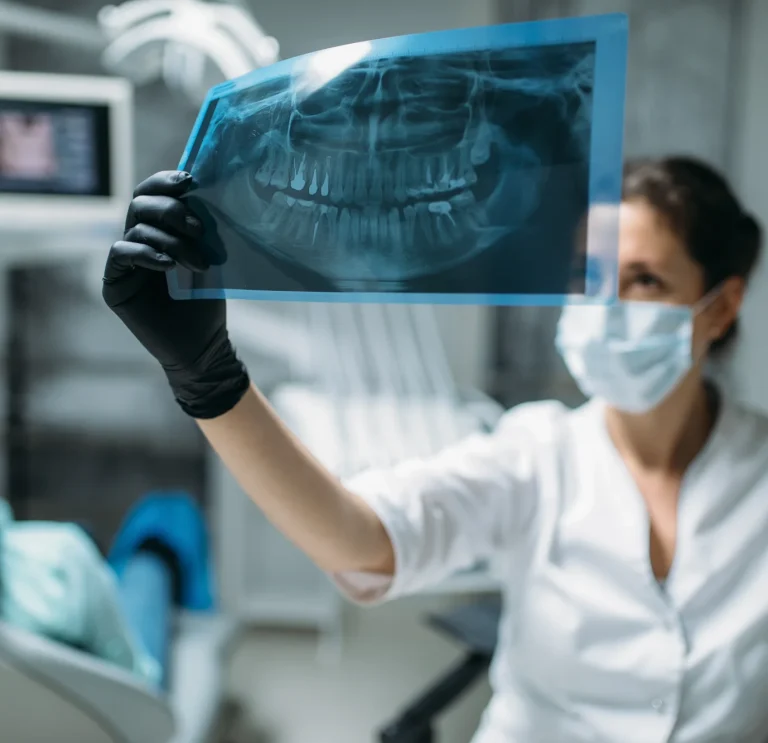
Most adult checkups include a small set of bitewing images, which capture the upper and lower back teeth biting together. These are the workhorses for finding decay between teeth and checking bone levels. For a more complete view, we use periapical images that show the full length of a tooth from crown to root tip, and a panoramic image that captures the whole jaw, the sinuses, and any developing or impacted teeth.
The process itself is quick. You’ll wear a lead apron with a thyroid collar, our assistant will position a small sensor or have you stand at the panoramic machine, and the exposure takes a fraction of a second. The image comes up on the screen immediately. If something looks off, Dr. Rollings will point to it on the monitor, explain what he sees, and tell you what your options are, including the option to monitor it rather than treat it right away.
Imaging supports the rest of the care we provide here, from a routine dental exams in Chattanooga TN to more involved work like crowns and bridges in Chattanooga TN or root canal therapy in Chattanooga TN. The X-ray isn’t the treatment. It’s how we make a real diagnosis instead of a guess.
Why Better Imaging Leads to Better Decisions
Dentistry done well is largely about catching things early. A cavity caught between two teeth on a bitewing is a small filling. The same cavity caught a year later, after it’s reached the nerve, is a root canal and a crown. Bone loss caught on an X-ray at the early stage of gum disease is reversible with scaling and root planing in Chattanooga TN. Caught late, it’s a different conversation entirely.
We serve families across Chattanooga, East Ridge, Red Bank, Hixson, Soddy-Daisy, and Signal Mountain, and a lot of what we do at Wilcox Family Dental depends on having clear, current imaging in front of us. It’s the difference between Dr. Rollings telling you what he thinks might be going on and showing you what is going on. That’s the standard we work to.
If you’d rather hear all of this in person, that’s fine too. We’d rather you ask questions during a visit than nod along to something you’re unsure about.
Ready to See What We See?
Schedule a visit with Dr. Rollings and we’ll review your images together, explain what they show, and talk through what makes sense from here. New patients welcome at our Chattanooga office.